Future perfect continuous

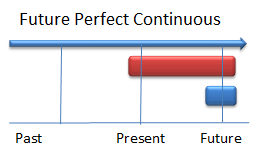
pasado va a continuar hasta un momento en el futuro. Este momento temporal tiene
que ser especificado para que la frase tenga sentido.
Se ve más fácil con un ejemplo:
When I retire, I will have been working for 40 years
¿Cuándo me jubile, habré estado trabajando durante 40 años
Conjugación
El futuro perfecto continuo (Future Perfect Continuous) en inglés se construye con esta estructura:
[SUJETO] + will/shall have been + [GERUNDIO DEL VERBO (-ing form)]
Nota: Como ya lo habíamos contado en el futuro simple, el auxiliar shall sólo se utiliza para la primera persona del singular y del plural.
Para dejar más clara esta estructura veamos a continuación cómo se conjuga el verbo to save (ahorrar):
| Conjugación | Significado |
|---|---|
| I will have been saving I shall have saving | yo habré estado ahorrando |
| you will have been saving | tú habrás estado ahorrando |
| he will have been saving | él habrá estado ahorrando |
| we will have been saving we shall have been saving | nosotros habremos estado ahorrando |
| you will have been saving | vosotros habréis estado ahorrando |
| they will have been saving | ellos habrán estado ahorrando |
Como hemos visto en el futuro simple los pronombres personales y el auxiliar "will" se pueden contraer:
I will --> I'll
Negación del Futuro Perfecto Continuo
[SUJETO] + will/shall not have been + [GERUNDIO DEL VERBO (-ing form)]
| Conjugación | Significado |
|---|---|
| I will not have been sleeping I shall not have been sleeping | yo no habré estado durmiendo |
| you will not have been sleeping | tú no habrás estado durmiendo |
| he/she/it will not have been sleeping | él no habrá estado durmiendo |
| we will not have been sleeping we shall not have been sleeping | nosotros no habremos estado durmiendo |
| you will not have been sleeping | vosotros no habréis estado durmiendo |
| they will not have been sleeping | ellos no habrán estado durmiendo |
will not se contrae en won't y
shall not se contrae en shan't
shall not se contrae en shan't
Interrogación en el futuro perfecto continuo
La interrogación se forma simplemente invirtiendo el verbo auxiliar y el sujeto:
will/shall + [SUJETO] + have been [GERUNDIO DEL VERBO]?
| Conjugación | Significado |
|---|---|
| will I have been traveling? shall I have been traveling? | ¿habré estado viajando? |
| will you have been traveling? | ¿habrás estado viajando? |
| will he have been traveling? | ¿habrá estado viajando? |
| will we have been traveling? shall we have been traveling? | ¿habremos estado viajando? |
| will you have been traveling? | ¿habréis estado viajando? |
| will they have been traveling? | ¿habrán estado viajando? |


0 comentarios: